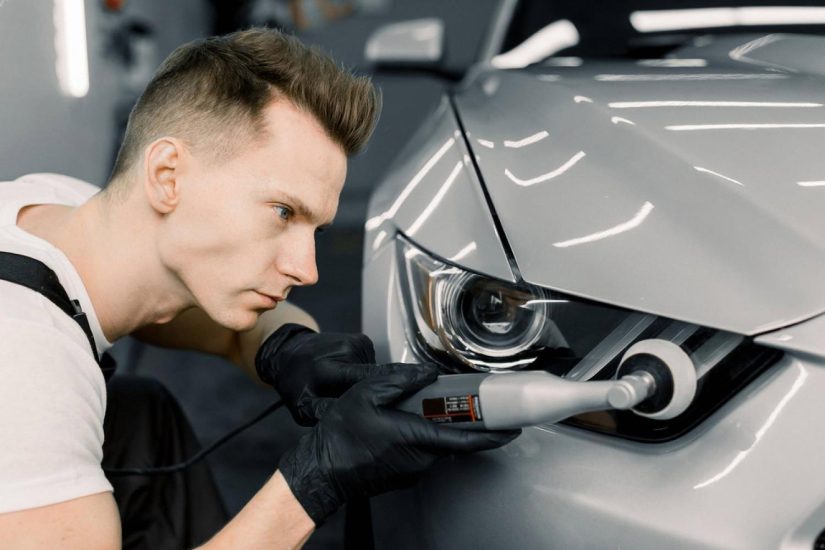
Headlights in the UAE fade faster than most drivers expect. Strong sun, fine sand, and the odd stone chip attack the plastic lens month after month, and the change is gradual enough that you only notice it when you compare last year’s photo to today. The table below sums up what polishing actually fixes, and what it doesn’t.
What headlight polishing can and cannot do
| Issue | Cause | Fixed by polishing? | Typical outcome |
|---|---|---|---|
| Yellow or hazy lens | UV oxidation of the polycarbonate | Yes | Clear again after one session |
| Fine scratches and sandblasting | Sand, dust, highway debris | Yes | Removed if shallow |
| Cloudy inner surface | Moisture inside the housing | No | Housing must be opened or replaced |
| Deep cracks | Impact damage or heat stress | No | Replacement required |
| Dim light output | Faded lens blocking beam | Yes | Beam brightness partly restored |
| Broken mounting tabs | Accidents, poor repairs | No | New unit needed |
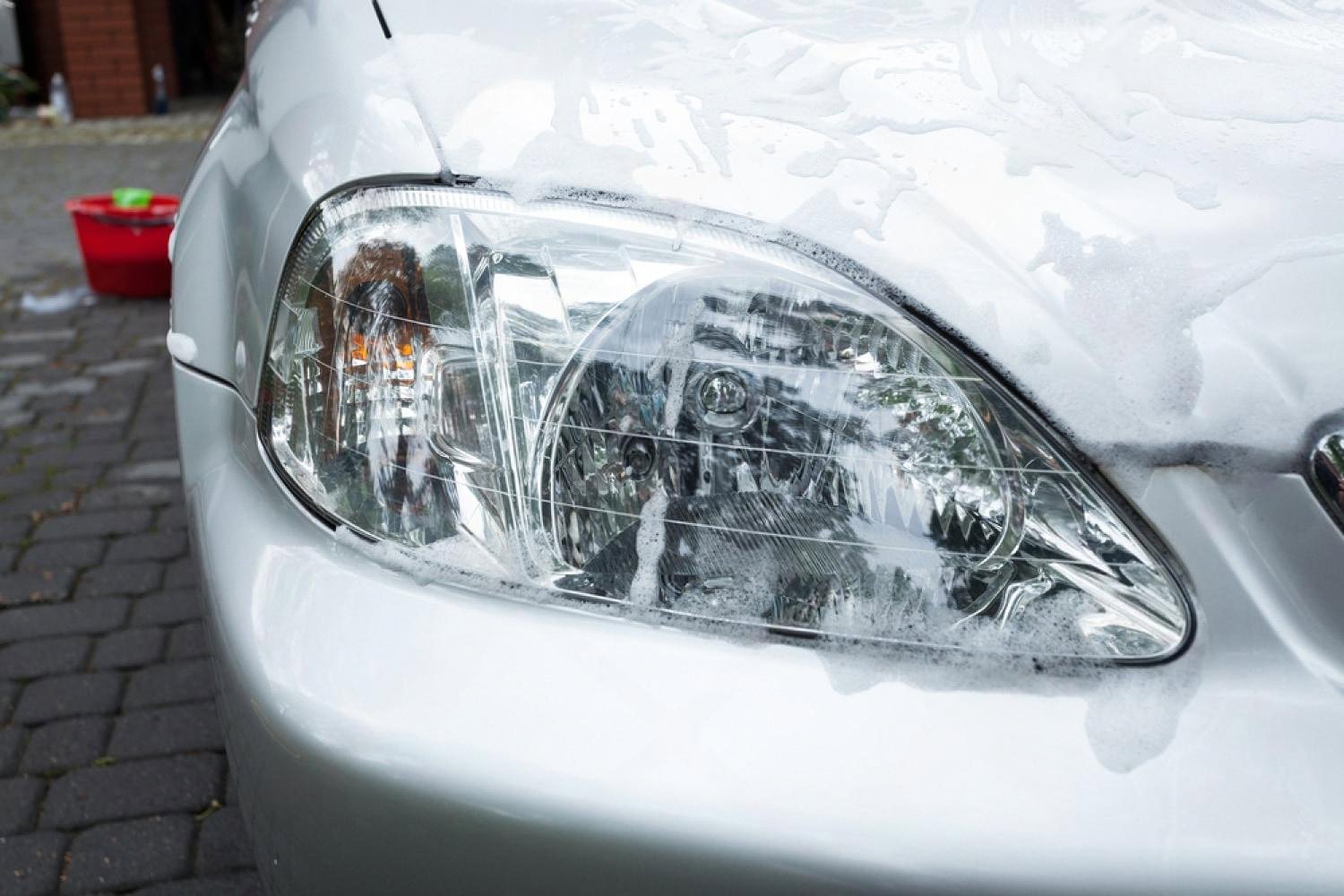
Row 1 & 2
Yellowing and fine scratches: the two things polishing solves best
Modern headlight lenses are polycarbonate, a tough plastic that ships from the factory with a thin UV-protective coating. In the Gulf climate, that coating breaks down within a few years. Once it goes, the plastic underneath oxidises, turns yellow, and begins to scatter light instead of projecting it forward.
Sand and highway grit add a second layer of damage. Every desert drive leaves microscopic scuffs on the lens. Individually they are invisible; together they form the milky film you see on older cars parked in the sun. Polishing removes the damaged surface layer in stages, working through progressively finer abrasives until the plastic looks new. If the scratches are shallow, they disappear entirely. Deep gouges will still be visible, but far less obvious.
Why a professional job is worth it
DIY kits from the auto-parts aisle can work on lightly hazed lenses, but they rarely include the final protective step, and that is where most home jobs fail. Without a fresh UV coating, the freshly polished plastic oxidises again within months, sometimes faster than before. According to polycarbonate manufacturers, unprotected polycarbonate degrades rapidly under sustained UV exposure, which is exactly what a UAE summer delivers.
Right abrasives
A workshop uses graduated sanding pads (typically 800 to 3000 grit) followed by machine polish. The plastic is cut evenly, not gouged.
Controlled heat
Rotary polishers run at speeds that soften the surface without warping it. Too much friction melts the lens, and no compound can undo that.
Sealed finish
A ceramic or urethane topcoat is applied and cured. This is what makes the result last two years instead of two months.
Bonus benefit
It pairs well with a full exterior refresh
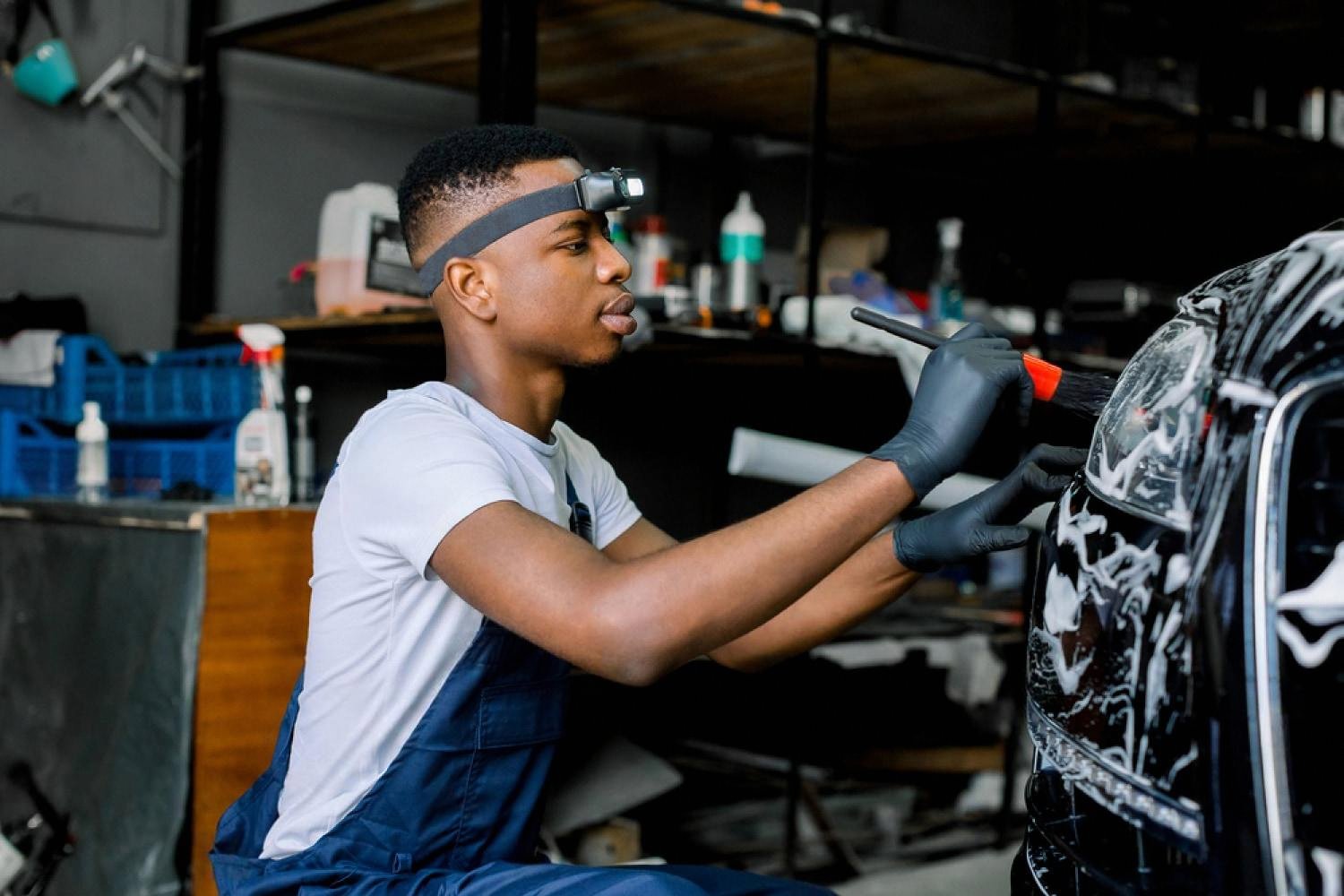
Most drivers who book a polish also want the rest of the car to match. It’s common to combine the service with a proper car exterior cleaning which removes the same sand, tar, and mineral deposits that dulled the headlights in the first place. Doing both at once means the whole front end looks consistent, and the technician can spot any paint chips or trim damage that also need attention.
Our recommendation
If your headlights show any yellowing or haze, book a polish before you consider replacement. A professional session in Dubai or Abu Dhabi costs a fraction of a new OEM headlight unit, which on many modern cars runs into thousands of dirhams per side. A polish every 18 to 24 months, sealed with a UV coating, keeps the plastic clear, the beam bright, and the resale value intact.
Signs it’s time to book
- Night driving feels dimmer than it used to, even with new bulbs
- The lens has a yellow, brown, or milky tint in daylight
- You can see fine scratch patterns when the sun hits the headlight
- The car is more than three years old and has never been polished
- You are preparing the car for sale or a Vehicle Passing Test
Frequently asked questions
How long does headlight polishing take?
A professional headlight polish usually takes 45 to 90 minutes for both headlights, depending on how badly oxidised the plastic is. If a protective coating is applied afterwards, add another 30 minutes for curing before the car goes back on the road.
How often should I polish my headlights in the UAE?
Every 18 to 24 months is a sensible interval for most cars driven daily in the Emirates. Vehicles that live outdoors in full sun, or that regularly drive on sandy roads, may need attention closer to the 12-month mark. A protective sealant applied after polishing extends the interval significantly.
Will polishing damage the plastic lens?
Not when done properly. A trained technician removes only the top oxidised layer, which is a few microns thick, and the polycarbonate underneath is still several millimetres deep. Problems only occur when someone uses a wrong grit, too much pressure, or lets the pad overheat the plastic.
Is polishing cheaper than replacing the headlight?
Almost always. A pair of OEM headlight units for a modern car can cost anywhere from AED 2,000 to well over AED 15,000, plus fitting and, on some models, coding. A professional polish is a small fraction of that and can be repeated several times over the life of the lens before replacement becomes unavoidable.
Can polishing improve the light output at night?
Yes, and often noticeably. A fogged lens scatters the beam and reduces the amount of light reaching the road. Once the surface is clear again, the headlight projects the beam pattern the manufacturer intended. It won’t turn old halogens into LEDs, but the improvement is real and measurable.
What if the haze is on the inside of the headlight?
Polishing only works on the outer surface. If the cloudiness is inside the housing, it usually means moisture has entered through a cracked seal or damaged vent. That is a repair job, not a polishing job, and in bad cases the entire unit has to be opened or replaced.
Should I get a protective coating after polishing?
Yes. Without a coating, the freshly exposed polycarbonate has no UV protection at all, and the Gulf sun will oxidise it again within months. A ceramic or urethane sealant applied at the end of the service is what makes the polish last for a year or two instead of weeks.

Soccer lover, feminist, guitarist, Eames fan and New School grad. Working at the sweet spot between modernism and sustainability to develop visual solutions that inform and persuade. I prefer clear logic to decoration.